

Engine History & Technical Analysis
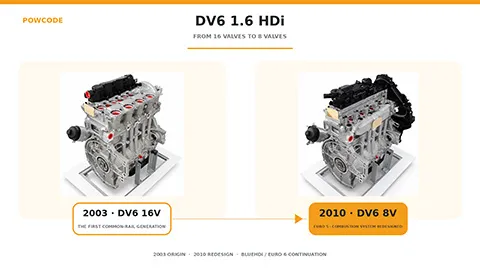
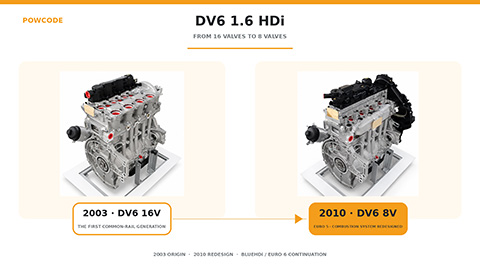
In 2010, Peugeot began replacing the familiar 1.6 HDi 110 with a new 1.6 HDi 112 in models including the 207 and 308.
The announcement sounded almost routine: two more horsepower, more torque, a six-speed transmission and Euro 5 compliance. On a vehicle specification sheet, it looked like the sort of mid-cycle update that rarely changes the history of an engine.
But an engine does not normally need more than half of its parts redesigned to gain 2 hp.
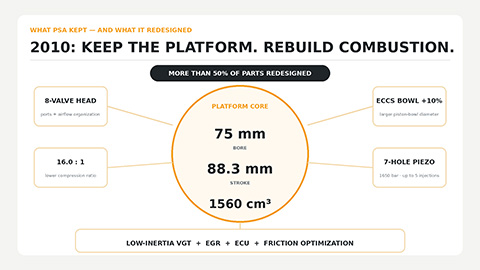
The displacement remained 1,560 cm³, and the engine still belonged to the DV6 family, yet the cylinder head moved from 16 valves to 8. The compression ratio fell from 17.5:1 to 16.0:1. The piston bowl became roughly 10% wider, in-cylinder swirl was reduced by almost 10%, six-hole solenoid injectors gave way to seven-hole piezoelectric injectors, and rail pressure rose from 1,600 to 1,650 bar. The turbocharger, EGR system and engine-control software changed as well.
Peugeot stated that more than 50% of the parts were completely redesigned. The badge still said 1.6 HDi and the engine still carried the DV6 identity, but the elements that governed how air and fuel met inside the cylinder had been reorganised.
This is where the history of the DV6 8V really begins.
In 2003, PSA and Ford Needed One Small Diesel Engine to Do a Very Large Job
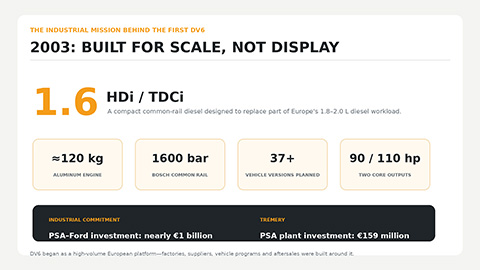
The DV6 was never conceived for a single Peugeot model. In February 2003, PSA Peugeot Citroën and Ford presented a new generation of 1.6- and 2.0-litre common-rail diesel engines developed under their joint programme. The 1.6-litre unit was marketed as HDi by PSA and TDCi by Ford, initially in 90 hp and 110 hp forms.
Its aluminium construction kept the engine weight to about 120 kg. A second-generation Bosch common-rail system supplied injection pressure of up to 1,600 bar and could schedule multiple injection events within one cycle. At launch, the partners expected the 1.6-litre engine to serve more than 37 vehicle versions.
The production plan was equally ambitious. PSA and Ford invested close to €1 billion in the new 1.6- and 2.0-litre diesel programme, with eventual annual capacity of more than 1.6 million engines. PSA alone spent €159 million adapting the Trémery production line in France.
Those figures place the early DV6 in its proper setting. It was not a low-volume technical showcase. It was an industrial platform created for the moment when European diesel cars were moving toward smaller displacement without giving up the torque and everyday flexibility previously supplied by larger engines.
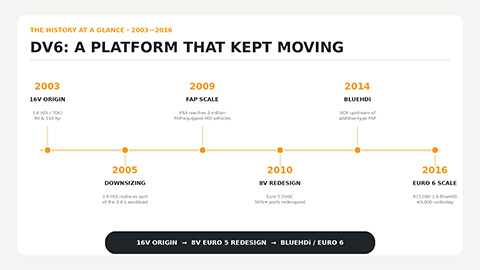
In 2005, the 1.6 HDi 90 began taking the place of the entry-level 2.0 HDi in the Peugeot 307 range. That change was more significant than the difference in badge size suggests. Common rail, turbocharging and increasingly precise electronic control were allowing a 1.6-litre diesel to assume work that had recently belonged to 1.8-, 1.9- and 2.0-litre engines.
As the PSA-Ford programme expanded, the supply system around it grew as well. By 2010, the wider Gemini cooperation had produced more than 16.5 million diesel engines and served brands including Peugeot, Citroën, Ford, Mazda, Volvo Cars, Jaguar and Land Rover.
That 16.5 million figure covers several engine families and displacements; it must not be presented as DV6 production alone. It still shows the industrial world in which DV6 had become established: factories, suppliers, vehicle platforms and service networks were already tied to a long-term cross-company diesel programme.
When emissions requirements changed again, PSA was therefore dealing with more than an ageing engine. It was dealing with an entire manufacturing and supply structure built around that engine.
The Original 16-Valve DV6 Had Already Done What It Was Designed to Do
The early DV6 used a 16-valve cylinder head. Its main 90 hp and 110 hp versions allowed the same 1.6-litre family to cover small cars, compact cars, MPVs and light commercial applications.
In higher-output form, the engine delivered around 240 Nm at 1,750 rpm, with approximately 260 Nm available during overboost. For a 1.6-litre diesel weighing about 120 kg, that was enough to displace part of the market previously occupied by larger units.
It is therefore misleading to read the later switch to 8 valves as proof that the original 16-valve design had been a mistake. The first DV6 answered the engineering brief of the early 2000s. It gave a small diesel a broad enough performance range to spread rapidly across the PSA and Ford product lines.
The brief changed around it.
When DV6 arrived, European diesel development was still heavily focused on particulate emissions. PSA had already begun expanding its additive-assisted FAP particulate-filter system. In 2009, the company marked its three-millionth FAP-equipped HDi vehicle. Fittingly, it was a Peugeot 207 1.6 HDi.
By then, particulate aftertreatment was maturing, while Euro 5 placed greater pressure on NOx, combustion temperature, EGR operation, injection accuracy, fuel consumption and cold-running emissions. These targets do not naturally move in the same direction.
Higher combustion temperature may help efficiency in some operating areas but tends to increase NOx. More EGR can suppress temperature but changes oxygen availability and soot formation. Lower compression can reduce peak temperature and combustion noise, yet it also affects compression temperature, ignition delay and cold starting. Finer fuel atomisation helps mixing, but only if the spray pattern agrees with the piston bowl and the movement of air inside the cylinder.
By the end of the Euro 4 period, calibration alone was no longer enough. PSA had to reconsider how air entered the cylinder, where the fuel spray travelled and how combustion developed after injection.
The 2010 Redesign Went Far Beyond Replacing a 16V Head with an 8V Head
The DV6C retained the DV6 family's 75 mm bore, 88.3 mm stroke and 1,560 cm³ displacement. Inside the upper engine, however, it moved to an 8-valve layout and a new combustion system.
| Technical area | Earlier high-output DV6 16V | Euro 5 DV6C 8V |
|---|---|---|
| Valve layout | 16 valves | 8 valves |
| Typical maximum power | About 110 hp | 112 hp at 3,600 rpm |
| Maximum torque | 240 Nm at 1,750 rpm | 270 Nm at 1,750 rpm |
| Overboost torque | About 260 Nm | 285 Nm |
| Compression ratio | 17.5:1 | 16.0:1 |
| Rail pressure | 1,600 bar | 1,650 bar |
| Injector design | Six-hole solenoid injector | Seven-hole piezoelectric injector |
| Piston combustion bowl | Earlier geometry | Diameter increased by about 10% |
| In-cylinder swirl | Earlier calibration | Reduced by almost 10% |
| Parts redesigned | - | More than 50% |
Of all those figures, 112 hp may be the least revealing.
Peugeot's published torque curve showed 135 Nm already available at 1,000 rpm, 242 Nm at 1,500 rpm and 270 Nm from 1,750 to 2,000 rpm. Even at 3,500 rpm, the engine still produced 224 Nm. The work was not centred on creating a headline peak-power number; it was spread across the part of the rev range used in ordinary driving.
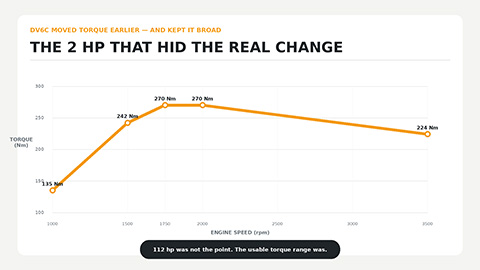
That does not mean the 8-valve head alone produced the torque curve. Injection, turbocharger response, combustion-chamber geometry and calibration all contributed. The valve count only makes sense inside the complete system.
The Piston Explains More Than the Badge
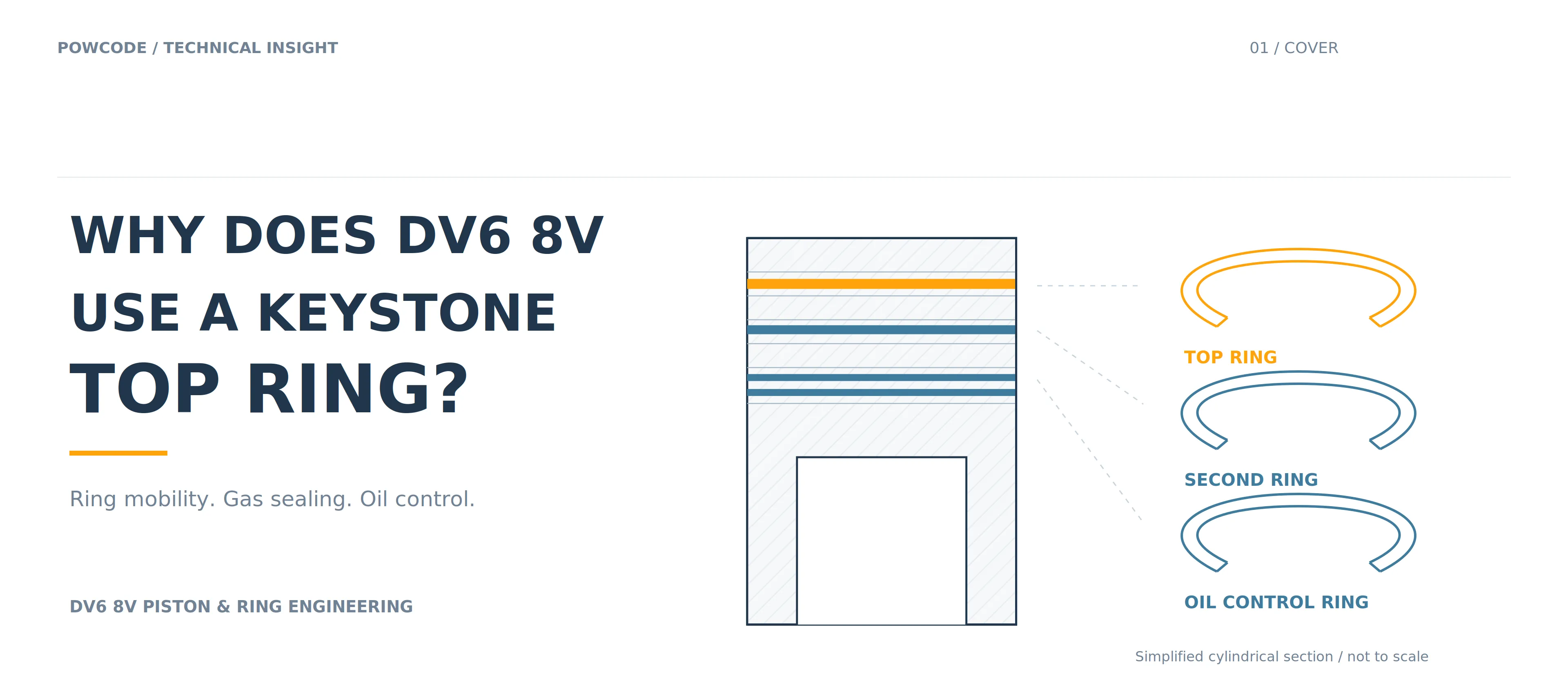
The compression ratio fell from 17.5:1 to 16.0:1. A lower ratio helped reduce peak combustion temperature, giving the engineers more room to manage NOx and combustion noise. It also changed compression-end temperature, ignition delay and cold-running behaviour, so it could not be treated as an isolated modification.
PSA changed the ECCS combustion chamber formed in the piston crown. The bowl diameter increased by about 10%, reducing contact between the fuel spray and the combustion-chamber wall. Swirl was reduced by almost 10% to limit unnecessary heat loss at the wall.
A diesel needs organised air movement, but more swirl is not automatically better. Excessive air motion can increase heat transfer to the walls, and a spray pattern that does not agree with the airflow may move fuel away from the region where it can burn most effectively. The DV6C strategy was about controlling the relationship between air and fuel more precisely, not simply making the air rotate faster.
The Seven-Hole Injector Belonged to the New Combustion Chamber
The new Continental common-rail system raised maximum pressure from 1,600 to 1,650 bar and replaced the earlier six-hole solenoid injectors with seven-hole piezoelectric units.
The extra 50 bar was not the important part. Seven nozzle holes changed how the fuel was distributed inside the bowl. Spray number, direction and penetration had to work with the larger piston chamber and the revised air motion. New engine-management software could schedule up to five injections per cycle, using different injection events to manage pressure rise, noise, torque and emissions.
The turbocharger was also changed to a smaller, lower-inertia variable-geometry unit, allowing boost to build more quickly. EGR operation, internal friction and the engine-control programme were revised around the same objective.
Seen in that context, the 8-valve cylinder head cannot be separated from the rest of the redesign.
Why Did PSA Change the DV6 from 16 Valves to 8 Valves?
PSA's public technical material described the DV6C changes in detail, but it did not reduce the move to 8 valves to a single sentence such as "less friction" or "more low-speed torque".
That absence matters. Engine development does not normally begin by choosing a valve count and then inventing reasons around it. Port geometry, valve position, airflow, swirl, injector placement and piston-bowl shape have to be designed together.
An 8-valve valvetrain does contain fewer valves and related moving parts than a 16-valve arrangement, giving it the potential for a more concentrated mechanical layout and lower valvetrain losses. That observation alone cannot explain why PSA also redesigned the piston, injection equipment, turbocharger, EGR system and electronic controls.
A 16-valve head generally offers greater total flow area and has its own advantages at higher engine speed. Yet the DV6C programme was not an attempt to turn a 1.6 HDi into a high-revving diesel. Its task was to balance Euro 5 emissions with useful torque, fuel consumption, noise and everyday operation across a large vehicle range.
POWCODE's reading of the redesign is this: PSA first established the combustion and emissions targets for the next stage of DV6, then redesigned the cylinder head, ports, piston bowl and injection system around those targets. The 8-valve layout was the structure produced by that system decision; it was not a one-line theory about 8V being universally better than 16V.
There is equally little value in using a later, separate engine family to prove that the DV6 decision was right or wrong. Different platforms face different emissions rules, output ranges and vehicle requirements. Valve count by itself cannot establish that historical cause-and-effect relationship.
The DV6C only had to answer its own question: how could a high-volume 1.6-litre diesel developed in the early 2000s remain viable under Euro 5?
PSA's answer was to retain the platform and rebuild the combustion system.
Why Did PSA Re-engineer DV6 Instead of Abandoning It?
By 2010, DV6 was more than an engine drawing. It had mature production lines, established suppliers, vehicle installation packages, transmission pairings and a broad service network. Replacing it with a completely new platform would have affected every one of those layers.
Leaving the old engine untouched would have been easier, but Euro 5 no longer allowed it to survive through minor calibration work alone.
PSA chose a path between those two extremes. The bore, stroke, displacement and industrial foundation continued. The cylinder head, piston, injection, boosting and control systems changed substantially.
From a manufacturing and supply-chain perspective, the decision was cautious. Inside the engine, it was anything but timid. Redesigning more than half of the parts shows that PSA did not treat the DV6C as a routine update to the previous unit.
The extra 2 hp was almost incidental.
The importance of the programme became clearer over the following years. Euro 5 DV6C and DV6D versions continued across Peugeot, Citroën and related applications at different output levels. DV6 then moved into the Euro 6 period through the BlueHDi emissions system.
BlueHDi placed SCR upstream of the additive-assisted FAP. Peugeot stated that the system could reduce NOx by up to 90% while continuing to remove 99.9% of particulates. With SCR taking a larger share of NOx control, engine calibration regained room to balance fuel consumption, CO₂ and performance.
The 1.6 BlueHDi 120 produced 120 hp and 300 Nm, with peak torque at 1,750 rpm. PSA reported a 7.5% to 8.5% reduction in CO₂ compared with the Euro 5 versions it replaced, with as much as four percentage points attributed to the calibration freedom made possible by SCR.
By 2016, Trémery had produced 815,000 examples of the 1.6 BlueHDi since its 2014 launch and was building approximately 5,000 of them per day.
The 2010 8-valve redesign was therefore not a brief end-of-life bridge. It gave a platform introduced in 2003 another complete technical cycle through Euro 5 and into Euro 6.
What the Engine-Parts Market Inherited from That History
The longer an engine remains in production and the more applications it covers, the larger its aftermarket becomes. Its catalogue also becomes harder to organise.
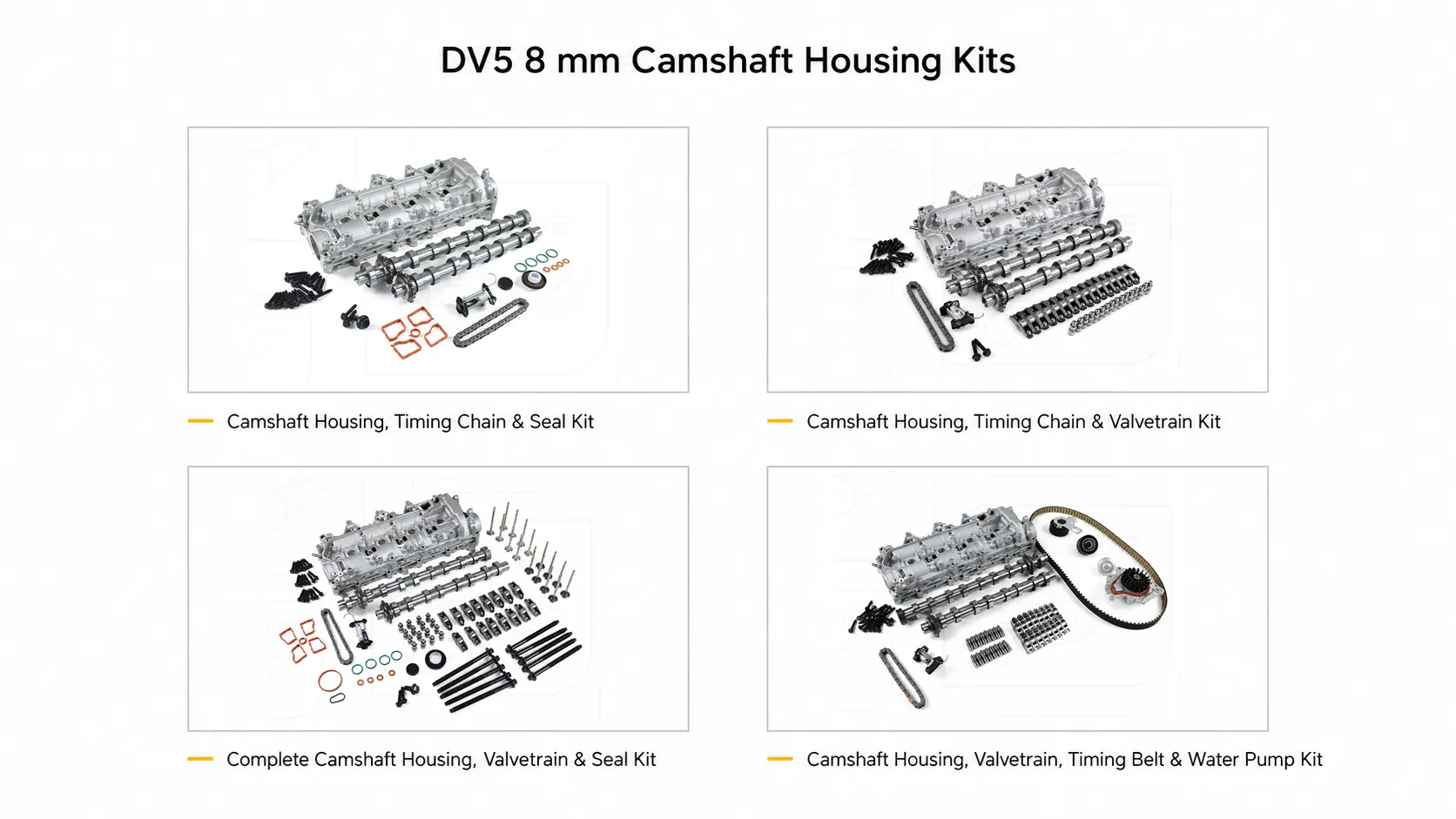
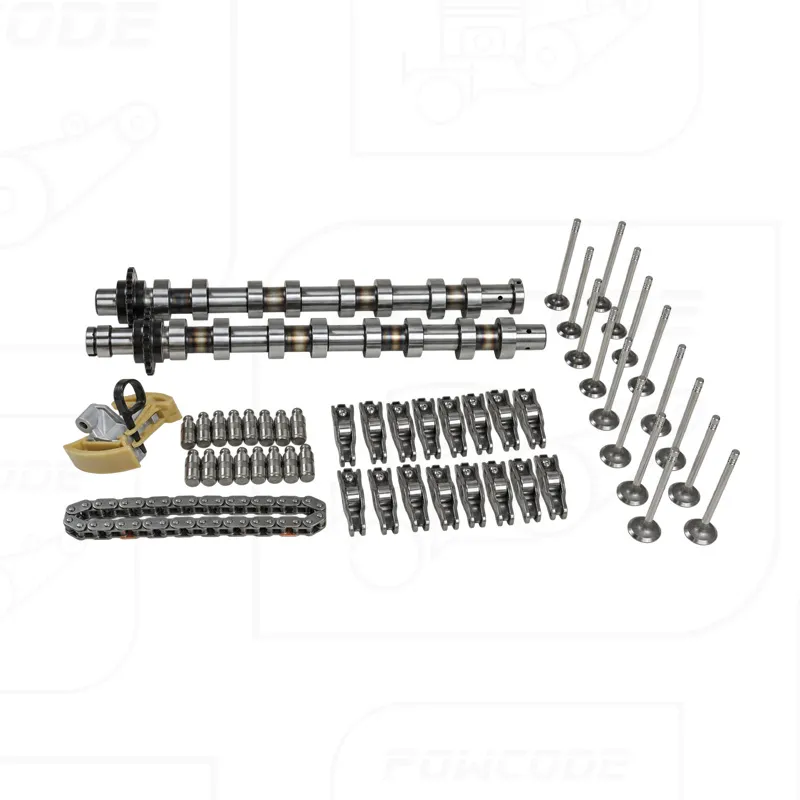
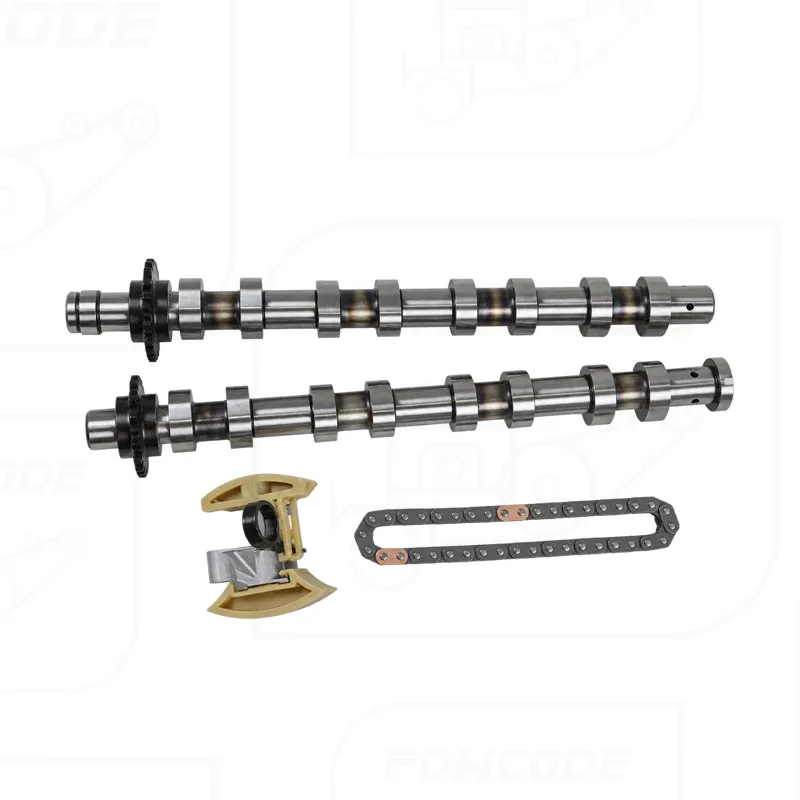
DV6 is a clear example. The market often uses "1.6 HDi", "1.6 TDCi" or simply "DV6" as broad descriptions, even though those labels can sit above the earlier 16-valve engine and the later 8-valve generation. In parts supply, an earlier DV6 16V camshaft and timing belt kit belongs to a different upper-engine structure from the later DV6 8V camshaft and valvetrain kit range. The cylinder head, valvetrain, piston bowl, injection system, turbocharger and EGR arrangement may all differ.
Professional buyers already know that DV6 has different generations. The practical difficulty lies elsewhere: vehicle makers, parts catalogues and suppliers do not always express those generations or assembly boundaries in the same way.
Kit boundaries follow the same history. A DV6 8V timing belt kit may be supplied as a timing-only configuration or together with a water pump, while a DV6 8V complete overhaul gasket kit covers a different repair scope. Neither should be selected from the family name alone.
One purchasing enquiry may refer to a bare block, short block, long block or cylinder head; another may cover only a set of internal components. Engine code, OE/reference, retained accessories and repair scope have to be considered together before the supply boundary is clear.
This is why POWCODE organises DV6 8V within the Parts by Engine Code platform structure rather than treating every listing containing the letters "DV6" as the same product. Buyers can use the DV6 8V engine parts and repair kits platform to explore assemblies, system kits and individual components by repair scope and OE/reference. The sequence matters: identify the generation and structure first, establish the required assembly level second, and then confirm OE/reference and the specific part.
That approach may sound more like catalogue engineering than engine history, but it comes directly from the history described above. PSA kept the DV6 identity in 2010 while redesigning more than half of its parts. The engine-parts trade still deals with the boundaries created by that decision.
DV6 Left Behind More Than an Engine
Europe's diesel era produced engines that were more powerful, more exotic and more technically conspicuous than DV6. DV6 gained its weight in history another way.
It was light enough for a small car and strong enough to replace part of the larger-displacement diesel market. It could spread across brands, vehicle classes and output levels, then change internally when emissions rules moved beyond the assumptions of its original design.
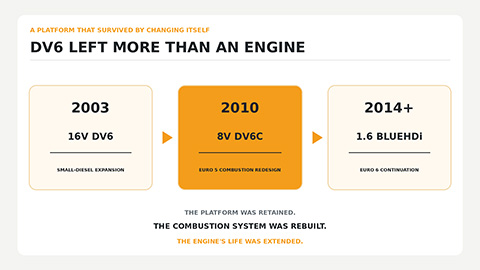
The 16-valve DV6 of 2003 arrived during the rapid growth of small common-rail diesels. The 8-valve DV6C of 2010 appeared at the next turning point, when high-pressure injection and a particulate filter were no longer sufficient on their own and the combustion chamber, EGR, injection and aftertreatment systems had to operate as a more closely integrated whole.
PSA neither carried the old engine unchanged into the next era nor discarded an industrial platform that still had value. It opened the platform, retained what remained useful, and reorganised the way air, fuel and combustion interacted.
The move from 16 valves to 8 was therefore not a minor footnote in DV6 history. It was the change that extended the engine from the first great period of European small diesels into the BlueHDi and Euro 6 years.
An engine may become popular through one successful design. To remain relevant across more than a decade and several emissions generations, it must also know how to change. That ability to change is central to the success of DV6.
Explore the DV6 8V Platform and Engine Parts
Use the POWCODE engine-platform structure to move from DV6 generation and engine code to the required assembly level, OE/reference and repair scope.
DV6 8V Engine Parts & Repair Kits
Explore DV6 8V assemblies, repair kits and individual components, with engine-system navigation and OE/reference enquiries.
Explore DV6 8V Engine PartsDV6 8V Long Block
Review the current POWCODE DV6 8V long-block page and confirm the engine code, OE/reference and required assembly scope before ordering.
View DV6 8V Long BlockFAQ
Why did PSA change the DV6 1.6 HDi from 16 valves to 8 valves?
PSA did not publish one single reason for the valve-count change. The 8-valve head appeared as part of a coordinated Euro 5 redesign involving the ports, piston combustion bowl, compression ratio, injectors, rail pressure, turbocharger, EGR and engine-management software. It is more accurate to treat 8V as the result of the new combustion-system architecture than as an isolated cost or torque decision.
Was the DV6C simply a simplified version of the earlier DV6 16V?
No. Peugeot stated that more than 50% of the parts were completely redesigned. The change included a lower compression ratio, a larger piston bowl, revised swirl, seven-hole piezoelectric injectors, higher rail pressure, a lower-inertia variable-geometry turbocharger, revised EGR and new engine-control software.
What were the main output differences between the DV6 16V and DV6C 8V?
The earlier high-output 16-valve version was commonly rated at about 110 hp and 240 Nm, with approximately 260 Nm during overboost. The Euro 5 DV6C produced 112 hp at 3,600 rpm and 270 Nm at 1,750 rpm, rising to 285 Nm during overboost.
Are DV6 8V and DV6 16V engine parts interchangeable?
They should not be treated as one interchangeable parts group. Some lower-engine dimensions and selected service parts may share a platform basis, but the cylinder head, valvetrain, piston combustion chamber, injection equipment and related systems differ by generation and version. Confirm the engine code, OE/reference, original-part structure and required assembly level before ordering.
Why is the DV6 8V important in the history of the 1.6 HDi?
The 8-valve redesign gave the established DV6 industrial platform a second technical life. It carried the family through Euro 5 and provided the foundation for later 1.6 BlueHDi versions entering the Euro 6 period.
References
- PSA Peugeot Citroën and Ford unveil new diesel engines, February 2003
- Ford and PSA Peugeot Citroën mark ten years of the Gemini diesel-engine programme, September 2010
- Peugeot 1.6 HDi 112 Euro 5 technical launch information, April 2010
- Peugeot ECCS combustion-chamber, compression-ratio and swirl information, January 2010
- PSA's three-millionth FAP-equipped HDi vehicle, January 2009
- Peugeot BlueHDi technology and 1.6 BlueHDi engineering data, February 2014
- PSA's one-millionth BlueHDi engine and Trémery production data, May 2016