- Popular Products
- Products
- About POWCODE
- Catalogue
- Resource
- Contact Us

Why We Buy More Than One Real Engine Sample Before Developing Parts
Jun. 11, 2026
Share:
In the engine parts business, some questions cannot be answered by OE number alone.
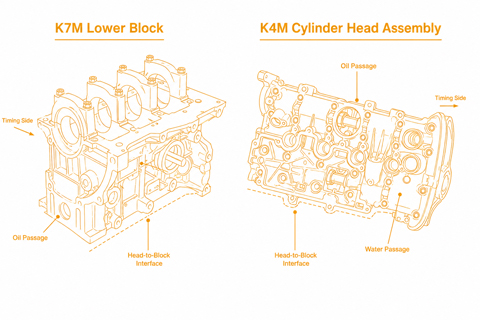
Take K7M and K4M as an example.
A customer may ask:
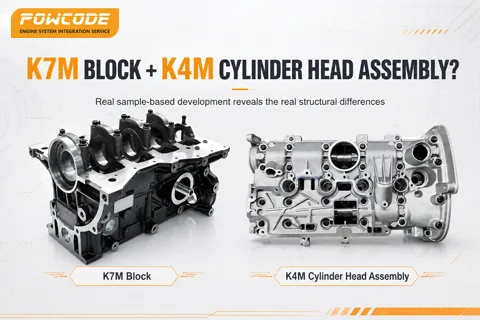
Can a K7M cylinder block work with a K4M upper cylinder head assembly?
If we only look at catalog data, this question may look simple.
But after we actually tear down engines and compare parts, we know it is not just a “yes” or “no” question.
K7M is an 8-valve engine.
K4M is a 16-valve engine.
Both belong to the Renault K-series, and both are commonly known as 1.6L engines.
But the cylinder head, pistons, valve position, timing system, oil passages, water passages, intake and exhaust structure, and ECU matching all need to be checked again.
That is why POWCODE buys real engine samples before developing key engine parts.
For some engine models, we do not buy only one sample.
We buy several, sometimes more than ten units.
Not for display.
Because without real parts on the table, many differences cannot be seen.
Many people think that if the engine code is the same, the structure must also be the same.
In reality, this is not always true.
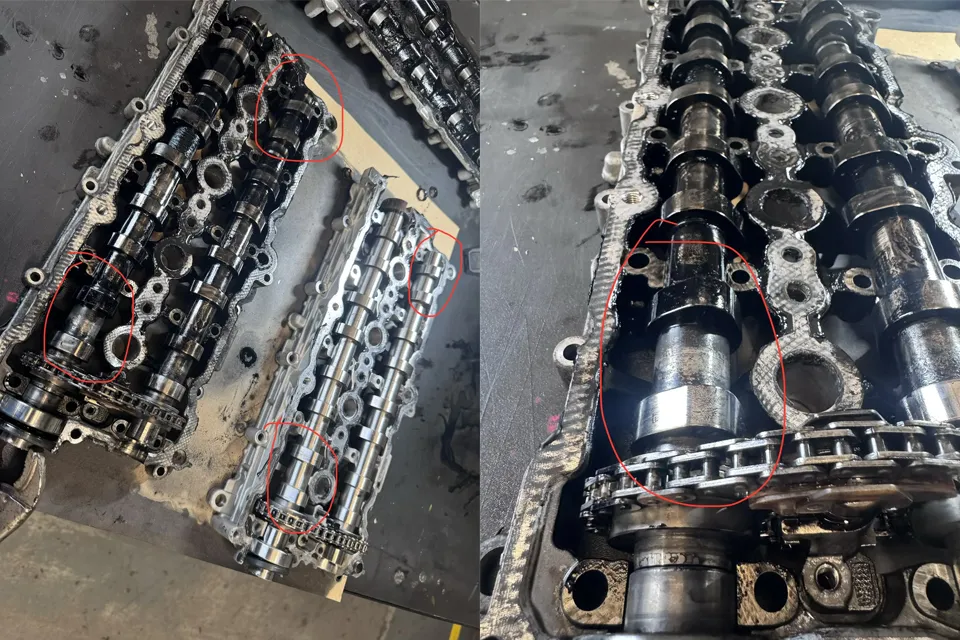
The same K4M engine family may have early and later versions.
The same K7M engine family may have different market versions.
The same cylinder head number may have different accessory mounting details.
The same engine series may use different timing structures between earlier and later versions.
K4M is a good example.
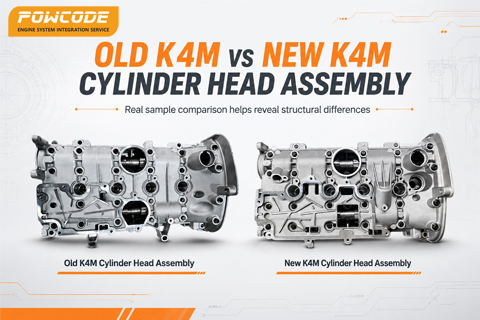
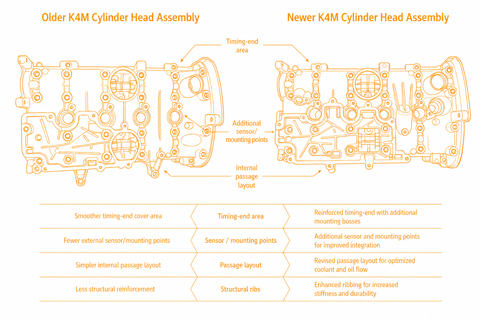
Some early K4M versions use a simple timing structure.
Some later K4M versions may involve VVT or a dephaser pulley, which is related to intake camshaft timing adjustment.
This may look like only a timing pulley difference, but it can affect many related parts:
Camshaft
Timing pulley
Valve cover
Sensor position
Timing kit
Cylinder head accessory mounting points
Wiring and ECU matching
If we only look at the name “K4M 1.6 16V”, it is easy to mix early and later versions.
But during real installation, one different mounting hole, one sensor position or one timing pulley structure may cause the part to fail to fit.
So when we buy engines, we are not just checking the general appearance.
We want to understand:
How many versions does this engine model actually have?
Which parts are truly interchangeable?
Which parts look similar but cannot be mixed?
Which products need separate development?
Which parts can be combined into a repair kit?
These answers are not always written in catalogs.
They are not always clear from pictures.
Many times, they only become clear after real teardown and side-by-side comparison.
We do not buy engine samples to make the work look complicated.
In the end, we do this to help customers avoid unnecessary trial and error.
For engine parts customers, the real cost is not only the product price.
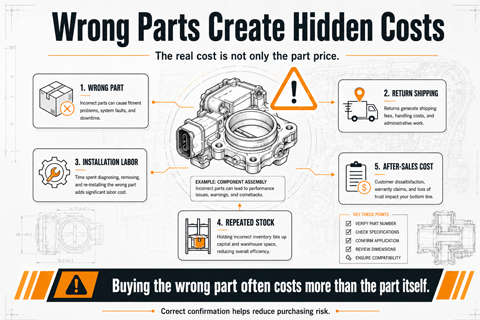
There are many hidden costs:
Cost of buying the wrong part
Return and replacement shipping cost
Labor cost caused by failed installation
Inventory cost from repeated purchasing
Capital pressure from stocking too many similar models
Time cost of after-sales communication
Loss of customer trust
If a supplier only quotes according to OE numbers, many risks may be left to the customer.
But if a supplier truly understands engine structure, they can help customers confirm in advance:
Which parts must be separated by version.
Which parts can be used across different engine models.
Which products can share the same inventory.
Which repair kit combinations can reduce repeated purchasing.
Which parts must not be mixed just to save cost.
This is where professional knowledge becomes useful.
Real cost saving does not mean buying a cheaper wrong part.
It means buying the correct part, reducing mismatch, avoiding repeated purchasing and lowering after-sales risk.
Different engine models may have different overall structures, but that does not mean every part is different.
In real development work, we often find that some parts are the same or interchangeable between related engine models.
For example, within the same engine family, some seals, bolts, valve components, rocker arms, hydraulic lifters, timing accessories, sensor interfaces and small repair parts may have common applications.
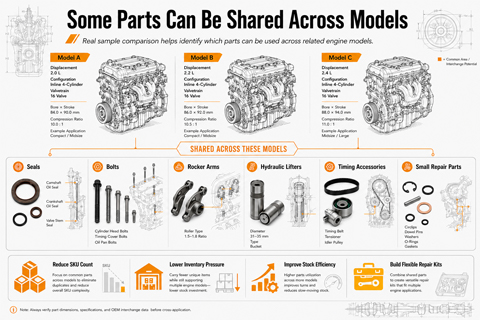
If real sample comparison confirms that these parts are interchangeable, we can help customers:
Reduce SKU quantity
Lower inventory pressure
Improve stocking efficiency
Reduce repeated purchasing
Build more flexible repair kit combinations
Cover more vehicle applications with fewer stock items
This is very practical for wholesalers, repair workshops and engine remanufacturing customers.
But interchangeability cannot be guessed.
Some parts look the same, but the size, hole position, material, thickness or working position may be different.
Some parts have a similar appearance, but may not work under the same operating conditions.
Some parts may work on one engine model, but cause installation problems on another engine model.
So POWCODE does not casually tell customers, “This part can be used.”
If a part is confirmed to be interchangeable, we help customers optimize purchasing.
If a part cannot be mixed, we clearly remind customers not to use it incorrectly.
This is the real value of sample-based development.
The discussion around K7M and K4M is a good example.
From a general point of view, both belong to the Renault K-series 1.6L engine family.
That is why some people discuss whether a K7M lower block can be assembled with a K4M upper cylinder head assembly.
But from the perspective of engine parts development, this question cannot be treated too simply.
K7M is an 8-valve engine.
K4M is a 16-valve engine.
The valve layout, camshaft structure and timing system of the K4M cylinder head are different from those of K7M.
If someone wants to assemble a K4M upper cylinder head assembly onto a K7M lower block, many details must be confirmed:
Is the piston valve clearance enough?
Is the compression ratio suitable?
Does the head gasket match?
Do the water passages and oil passages align?
Does the timing system match correctly?
Can the ECU system support it?
That is why we do not simply describe K7M and K4M as directly interchangeable.
For repair customers, that may be misleading.
For wholesale customers, that may increase after-sales risk.
For our own product development, that would not be responsible.
But this case also shows another point:
Within the same engine family, some structures may be close, and some parts may have a common basis.
The key is to know which parts can be shared and which parts must never be mixed.
This judgment cannot rely only on catalogs.
It must be based on real samples, teardown, measurement and comparison.
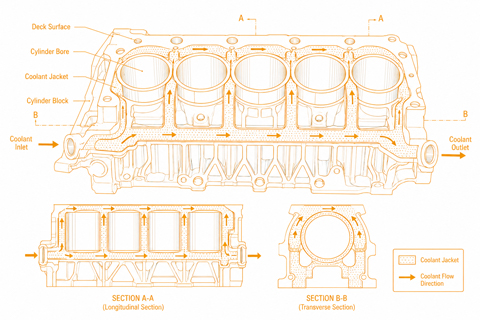
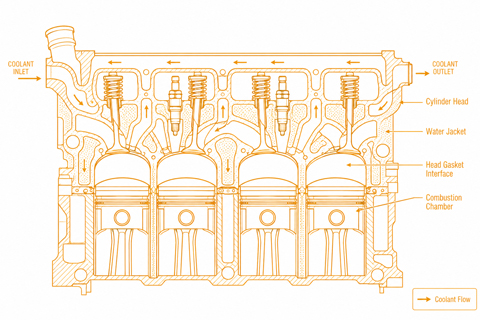
When we buy real engines, we do not just take a few photos.
The useful work is teardown, measurement, comparison and record keeping.
We check:
Engine code
OE number
Cylinder head shape
Intake and exhaust ports
Water passage position
Oil passage position
Bolt hole position
Cylinder block mounting points
Piston top structure
Combustion chamber shape
Valve position
Camshaft structure
Timing pulley structure
VVT or dephaser pulley design
Sensor position
Accessory bracket mounting holes
Early and later version differences
Differences between vehicle applications
Interchangeable parts across engine models
Key structures that must not be mixed
Some differences are not shown in catalogs.
Some differences cannot be seen clearly from pictures.
Some differences can only be understood when two real parts are placed side by side.
This is the real work behind engine parts development.
Customers are not only worried about a slightly higher price.
They are more worried about these situations:
The goods arrive, but cannot be installed.
The parts can be installed, but do not work correctly.
The product works at first, but causes problems later.
The customer buys in bulk, then finds out that the version is wrong.
For products such as cylinder heads, cylinder blocks, short blocks and engine repair kits, one wrong order can create a high cost.
The customer may face shipping cost, installation labor, replacement cost, after-sales communication and even loss of trust from their own customers.
This is why POWCODE invests in real sample development.
We are not doing this just to look professional.
We are doing this to help customers reduce these problems.
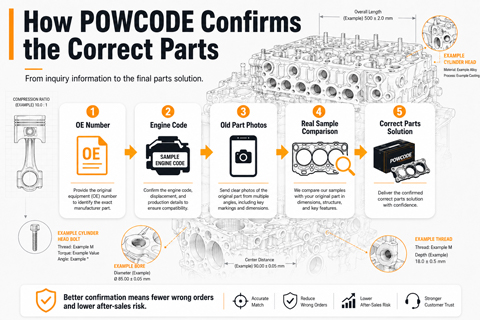
When a customer gives us an OE number, we may further confirm the engine code.
When a customer gives us an engine code, we may ask for old part photos.
When the version is uncertain, we help compare the structure.
When a customer needs a repair kit, we can combine parts according to the real engine model, such as cylinder head, cylinder block, pistons, timing parts and gasket sets.
If a customer works with several similar engine models, we can also help identify which parts can be purchased together and which parts must be stocked separately.
This not only reduces wrong orders, but also helps customers optimize inventory and use purchasing funds more effectively.
That is the real value of B2B engine parts supply.
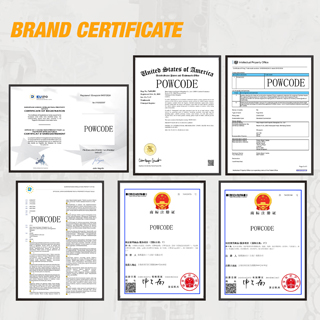
Many suppliers can offer a price.
But B2B engine parts customers need more than a quotation.
They need a supplier who can help them:
This is the direction POWCODE is working toward.
We do not want to only sell one cylinder head, one cylinder block or one repair kit.
We want to build more complete engine parts solutions around each specific engine model.
Real engine samples.
Real teardown.
Real comparison.
Real development.
Real cost reduction for customers.
These are the real investments POWCODE makes in engine parts development.
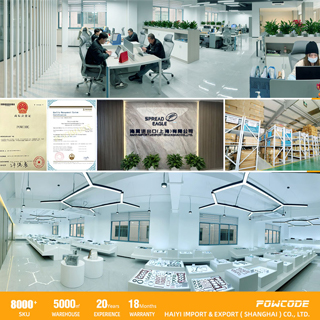
The discussion around K7M and K4M, as well as the differences between early and later K4M versions, shows one important fact:
Engine parts development cannot rely only on catalogs.
Catalogs are useful references.
OE numbers are useful references.
Photos are useful references.
But the real factor that determines whether a part fits is the actual engine structure.
This is why POWCODE insists on purchasing real engine samples.
For key engine models, we are willing to buy multiple engines, even more than ten units, for teardown and comparison.
Because we know that customers do not only need a simple answer like “it can be used”.
Customers need an engine parts solution that can truly be installed, work reliably, support long-term supply, and help reduce purchasing risk and inventory cost.
Through real sample-based development, POWCODE helps customers confirm products more accurately, purchase more efficiently and build long-term cooperation with more confidence.
Latest News

Related Products
 Request Your Custom Quote
Submit your requirements in minutes and get a precise, competitive quote tailored to your needs.