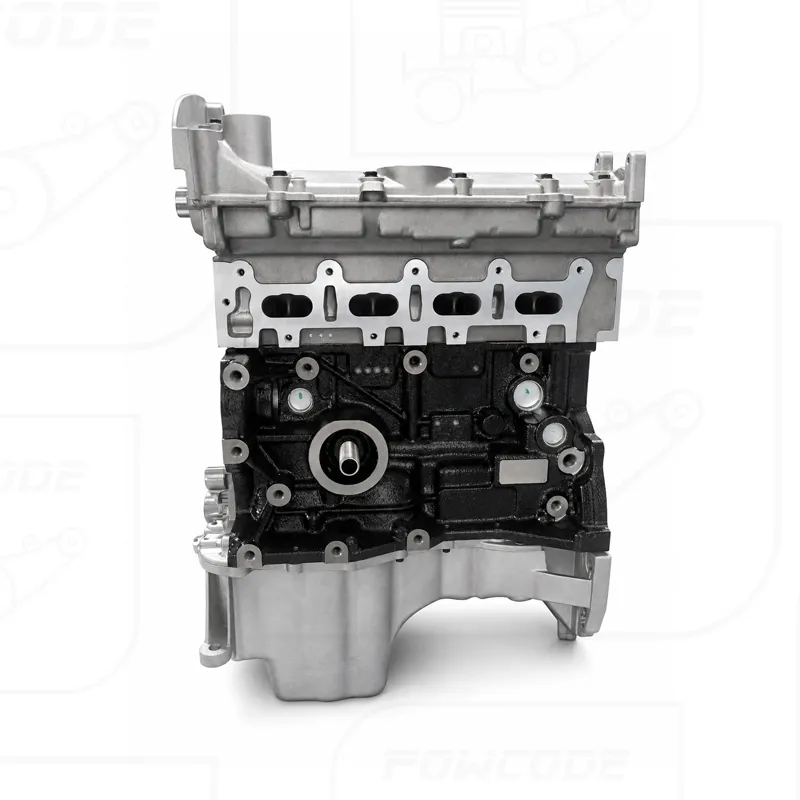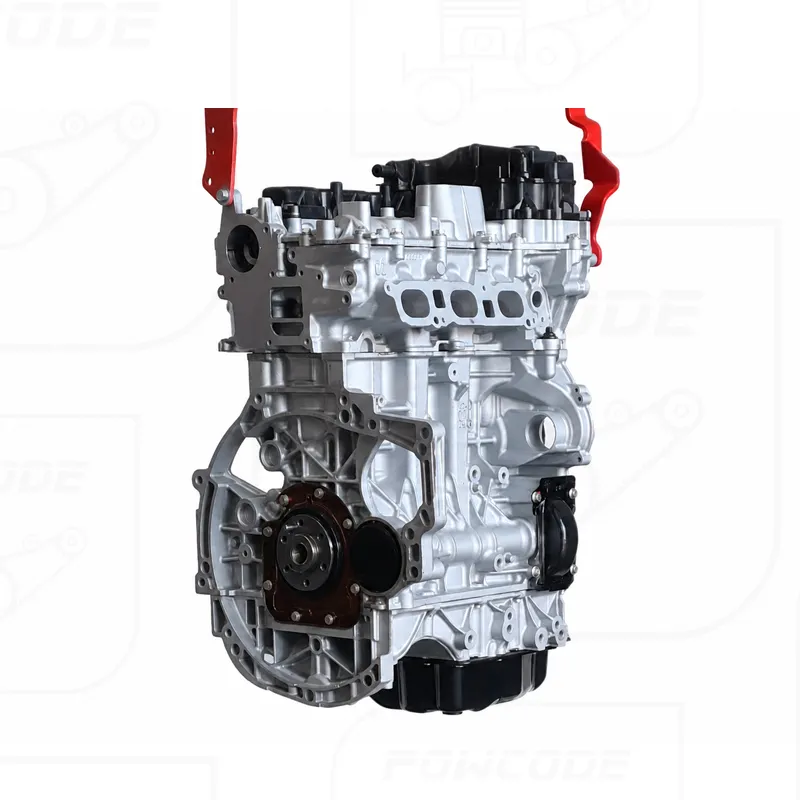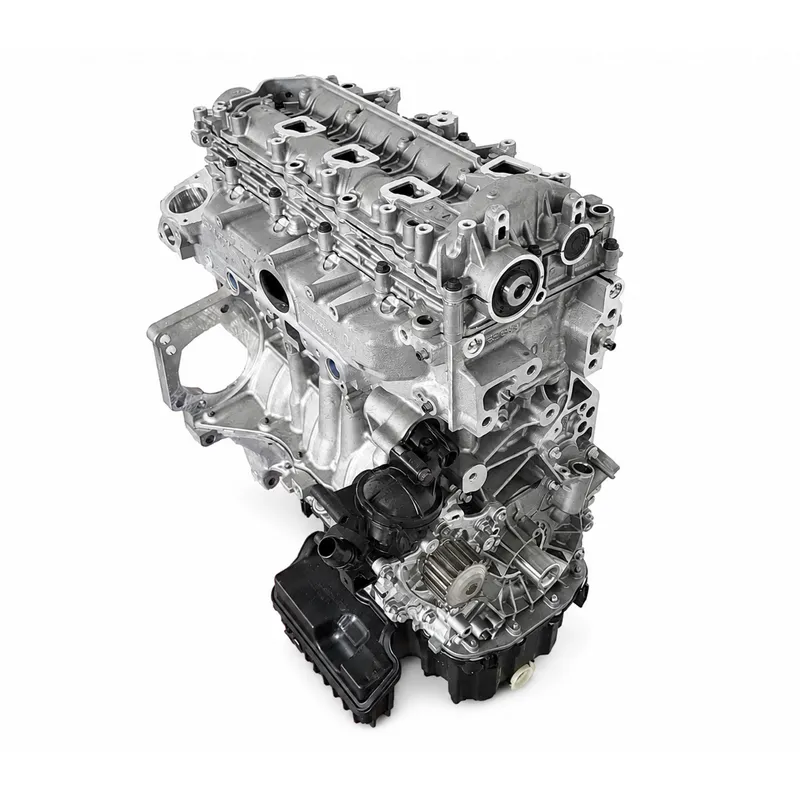


How to Read Renault Engine Codes: K4M, K7M, M9T, M9R, K9K and H5F Explained
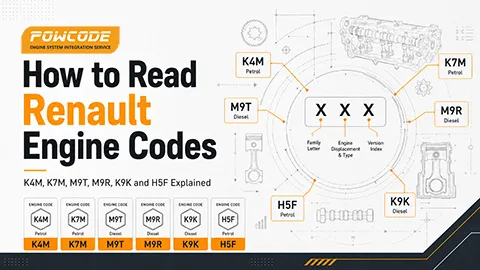
For Renault engine parts buyers, engine codes such as K4M, K7M, M9T, M9R, K9K and H5F are important references when confirming cylinder heads, short blocks, long blocks, timing kits, pistons, crankshafts, turbochargers and other engine repair parts.
However, Renault engine codes are often misunderstood. One common mistake is reading the middle number as the cylinder count. For example, M9T, M9R and K9K all use the number “9”, but they are not nine-cylinder engines.
Quick reading rule: Classic Renault three-character engine codes should usually be read as first letter = engine family, middle number = cylinder head / fuel supply / injection type, and final letter = displacement range.
Browse POWCODE Renault Engine Parts
If you are sourcing Renault engine parts, you can also browse POWCODE product categories below.
Popular Products
View POWCODE popular engine repair parts and engine assembly products.
View ProductsLong Block
Browse long block engine assemblies for professional engine repair sourcing.
View Long BlockShort Block
Find short block assemblies for Renault and related engine applications.
View Short BlockCylinder Head Assy
Check cylinder head assemblies for engine rebuilding and replacement.
View Cylinder Head AssyCamshaft Housing Kit
Browse camshaft housing kits and related camshaft repair components.
View Camshaft Housing KitTiming Belt Kit
View timing belt kits for engine timing system repair and replacement.
View Timing Belt Kit1. Basic Structure of Renault Engine Codes
Classic Renault engine codes usually follow a three-character base structure:
First letter + middle number + final letter
Examples:
In practical engine parts identification, the three-character base code can generally be understood as:
| Code Position | Practical Meaning |
|---|---|
| First letter | Engine family or base engine platform |
| Middle number | Cylinder head / fuel supply / injection type code |
| Final letter | Displacement range |
| Additional suffix numbers | Version index for vehicle application, emission standard, calibration, transmission interface, mounting layout and accessory arrangement |
This structure helps buyers quickly understand the general engine family and technical direction. However, final parts confirmation should still be based on VIN, OE number, engine nameplate, ECU label and old sample comparison.
2. First Letter: Engine Family
The first letter usually refers to the engine family or base platform.
| First Letter | Practical Engine Family Meaning | Typical Codes | Notes | Confidence |
|---|---|---|---|---|
| C | Early Cléon-Fonte series | C2J | Traditional older Renault engine type | Medium |
| D | D-series small-displacement cast iron family | D7F, D4F | Older small car platform | Medium |
| E | Energy older-generation family | E7J | 1980s–1990s mainstream small-displacement engine | Medium |
| F | F-series cast iron four-cylinder family | F4R, F9Q | Renault mainstream platform after the 1980s | Medium to High |
| G | G-series medium / large diesel family | G9U, G9T | Commercial / larger vehicle platform | Medium |
| H | H engine family | H4M, H5F, H5H | Often related to Nissan / Alliance engines | Medium to High |
| J | Douvrin / PSA joint older family | J8S | Older joint platform source | Medium |
| K | K engine family | K4M, K7M, K9K | Renault small-displacement core family | High |
| L | PSA / Renault V6 family | L7X | Older PSA-related V6 | Medium |
| M | M engine family | M9T, M9R, M4R, M5M | Renault-Nissan Alliance related engine family | High |
| N | Volvo source family | N7Q | Volvo modular source | Medium |
| P | P engine family | P9X | Isuzu source V6 diesel | Medium |
| R | R engine family | R9M, R9N | New-generation Alliance diesel family | High |
| S | S engine family | S8U, S9U | Sofim source commercial diesel | Medium |
| V | V engine family | V4Y, V9X | Often Nissan VQ or Alliance V6 | Medium |
| Z | Z engine family | Z7X | PRV / PSA-Volvo-Renault older V6 | Medium |
| T | No stable passenger-car three-character family rule found | — | If encountered, verify by VIN and OE catalogue | Low |
For example, K4M, K7M and K9K all belong to the K family, but they are different engines because the middle number and final letter are different.
3. Middle Number: Cylinder Head / Fuel System Type
The middle number is one of the most important parts of Renault engine code identification. It should not be read as the cylinder count.
| Middle Number | Typical Meaning | Practical Repair Judgment |
|---|---|---|
| 1 | Gasoline, parallel valves, single-barrel carburetor | Mainly older engines |
| 2 | Gasoline, parallel valves, double-barrel carburetor | Mainly older engines |
| 3 | Gasoline, parallel valves, injection | Often older injection engines |
| 4 | Gasoline, multi-valve / multi-point injection | Common in K4M, F4R, M4R, H4M |
| 5 | Usually gasoline direct injection in many later families, but with exceptions in older families | Must be read together with engine family and production era |
| 6 | Gasoline, hemispherical combustion chamber, double-barrel carburetor | Older engines |
| 7 | Gasoline, hemispherical combustion chamber, injection, 2 valves per cylinder | Common in K7M, E7J, D7F |
| 8 | Diesel Ricardo pre-chamber indirect injection | F8Q, J8S and similar older diesel engines |
| 9 | Diesel direct injection | K9K, F9Q, M9T, M9R, R9M, G9U, V9X and similar diesel engines |
Key correction: K7M should be understood differently from K4M, although both end with M and belong to the 1.6L displacement range.
This is also why M9T, M9R and K9K are diesel direct injection codes, because the middle number 9 indicates diesel direct injection in this practical reading.
4. Final Letter: Displacement Range
The final letter usually indicates the displacement range.
| Final Letter | Displacement Range | Typical Codes |
|---|---|---|
| J | 1351–1425 cc | K4J, E7J |
| K | 1426–1500 cc | K9K |
| L | 1501–1575 cc | Less common in modern mainstream Renault applications |
| M | 1576–1650 cc | K4M, K7M, H4M, R9M |
| P | 1751–1850 cc | F4P |
| Q | 1851–1950 cc | F9Q |
| R | 1951–2050 cc | F4R, M4R, M9R |
| T | 2151–2300 cc | M9T |
| U | 2301–2500 cc | G9U, V4U |
| V | 2501–2700 cc | Some V6 applications |
| X | 2951–3200 cc | P9X, V9X |
| Y | 3201–4000 cc | V4Y |
- K4M usually refers to a K-family gasoline engine in the 1.6L displacement range.
- K7M usually refers to a K-family gasoline injection engine in the 1.6L displacement range.
- K9K usually refers to a K-family diesel direct injection engine in the 1.5L displacement range.
- M9R usually refers to an M-family diesel direct injection engine in the 2.0L displacement range.
- M9T usually refers to an M-family diesel direct injection engine in the 2.3L displacement range.
- H5F usually refers to an H-family gasoline turbo engine in the 1.2L displacement range.
5. Full A–Z Displacement Letter Reference
The following A–Z table can be used as a quick reference when reading the final letter of a Renault engine code.
| Letter | Range | Letter | Range | Letter | Range |
|---|---|---|---|---|---|
| A | 0–825 cc | J | 1351–1425 cc | S | 2051–2150 cc |
| B | 826–900 cc | K | 1426–1500 cc | T | 2151–2300 cc |
| C | 901–975 cc | L | 1501–1575 cc | U | 2301–2500 cc |
| D | 976–1050 cc | M | 1576–1650 cc | V | 2501–2700 cc |
| E | 1051–1125 cc | N | 1651–1750 cc | W | 2701–2950 cc |
| F | 1126–1200 cc | P | 1751–1850 cc | X | 2951–3200 cc |
| G | 1201–1275 cc | Q | 1851–1950 cc | Y | 3201–4000 cc |
| H | 1276–1350 cc | R | 1951–2050 cc | Z | Over 4000 cc |
6. Example Reading: K4M, K7M, M9T, M9R, K9K and H5F
| Code | Step-by-Step Reading | Typical Specification | Common Application Notes |
|---|---|---|---|
| K4M | K family + 4 = gasoline multi-valve / multi-point injection + M = 1.6L range | 1598 cc, gasoline, commonly 16V | Kangoo, Mégane, Scénic and related Renault applications |
| K7M | K family + 7 = gasoline injection, commonly 2 valves per cylinder + M = 1.6L range | 1598 cc, gasoline, commonly 8V | Logan, Kangoo, Clio, Mégane and market-dependent applications |
| M9T | M family + 9 = diesel direct injection + T = 2.3L range | Around 2.3 dCi turbo diesel | Renault Master and related light commercial vehicle platforms |
| M9R | M family + 9 = diesel direct injection + R = 2.0L range | 1995 / 1997 / 1998 cc, dCi, commonly 16V | Laguna, Trafic, Koleos and related Alliance applications |
| K9K | K family + 9 = diesel direct injection + K = 1.5L range | 1461 cc, dCi turbo diesel | Clio, Kangoo, Mégane, Dacia and some Nissan-related applications |
| H5F | H family + 5 = modern gasoline direct injection type + F = 1.2L range | Around 1.2 TCe turbo gasoline | Renault / Nissan related 1.2 TCe applications |
7. Why the Suffix Numbers Still Matter
The first three characters help identify the base engine type, but many Renault engine codes include additional suffix numbers, such as:
These suffix numbers may reflect differences in vehicle application, emission standard, ECU calibration, transmission interface, mounting layout, accessory arrangement, intake and exhaust configuration.
Practical rule: Read the first three characters as the base engine type, but confirm parts by the full engine code, OE number, VIN and old sample.
8. Common Renault Engine Codes Quick Reference
| Code | Displacement | Fuel | Turbocharging | Common Valve Count | Typical Vehicles / Applications |
|---|---|---|---|---|---|
| K4M | 1598 cc | Gasoline | Naturally aspirated | 16V | Kangoo / Mégane / Scénic |
| K7M | 1598 cc | Gasoline | Naturally aspirated | Commonly 8V | Logan / Kangoo / Clio / Mégane |
| M9T | Around 2.3L | Diesel | Turbo | Version-dependent | Master / light commercial vehicle platforms |
| M9R | 1995 / 1997 / 1998 cc | Diesel | Turbo | 16V | Laguna / Trafic / Koleos |
| K9K | 1461 cc | Diesel | Turbo | Common 8V / 16V depending on generation | Clio / Kangoo / Mégane |
| H5F | Around 1.2L | Gasoline | Turbo | Commonly 16V | Renault / Nissan related 1.2 TCe applications |
| F4R | 1998 cc | Gasoline | Naturally aspirated or Turbo variants | 16V | Mégane / Scénic / Clio RS |
| F9Q | 1870 cc | Diesel | Turbo | Commonly 8V | Mégane / Scénic |
| M4R | 1995 / 1998 cc | Gasoline | Naturally aspirated | 16V | Mégane / Latitude / Fluence |
| R9M | 1598 cc | Diesel | Single / twin turbo | 16V | Trafic / Scénic / Mégane |
| R9N | 1749 cc | Diesel | Turbo | Version-dependent | Mégane / Scénic / Talisman |
| H4M | 1598 cc | Gasoline | Naturally aspirated | 16V | Clio 5 and related applications |
| H5H | 1332 cc | Gasoline | Turbo | 16V | Captur / Scénic and related applications |
9. Why Engine Code Identification Matters for Parts Buying
In automotive engine parts supply, one wrong engine code can lead to a wrong part.
- Cylinder Head Assy
- Short Blocks
- Long Blocks
- Timing Belt Kits
- Camshaft Housing Kits
- Pistons, crankshafts, turbochargers and EGR valves
Two engines may look similar, but different suffix numbers may mean different mounting points, sensor positions, accessory layouts or emission-related configurations.
For professional buyers, the safest confirmation method is:
- Confirm the engine code.
- Confirm the full engine suffix.
- Check the OE number.
- Match the vehicle application.
- Compare the old sample or product photo.
- Confirm by VIN when necessary.
FAQ
Does the middle number in a Renault engine code mean cylinder count?
No. In practical Renault engine code reading, the middle number usually indicates cylinder head type, fuel supply or injection type, not the number of cylinders.
What does the final letter in a Renault engine code usually mean?
The final letter usually indicates a displacement range. For example, M usually indicates 1576–1650 cc, K indicates 1426–1500 cc, R indicates 1951–2050 cc, and T indicates 2151–2300 cc.
Is the three-character Renault engine code enough for ordering parts?
No. The three-character code is only the starting point. Final parts confirmation should also include the full engine suffix, OE number, VIN and old sample comparison.
Need Help Confirming Renault Engine Parts?
POWCODE supplies Renault engine parts including cylinder head assy, short blocks, long blocks, timing belt kits, camshaft housing kits and related engine repair components. If you are not sure which engine part fits your application, please send us the OE number, engine code, vehicle model and product photo for confirmation.
Popular Products
Explore POWCODE engine parts and commonly requested repair products.
View Popular ProductsCylinder Head Assy
Find complete cylinder head assemblies for professional repair sourcing.
View Cylinder Head AssyCamshaft Housing Kit
Check camshaft housing kits and related engine top-end components.
View Camshaft Housing KitTiming Belt Kit
View timing belt kits for engine timing system maintenance and repair.
View Timing Belt KitReferences
- Renault User Manual — Engine Identification and Engine Specifications
https://www.user-manual.renault.com/en/information-about-the-vehicle/engine-identification-engine-specifications - Renault User Manual — Technical Specifications / Engine Specifications
https://www.user-manual.renault.com/en/content/x61/section-6-technical-specifications/engine-specifications-13 - Renault User Manual — Mégane III Engine Specifications
https://www.user-manual.renault.com/sites/renault/files/Megane_3_Ph2_-_1116-4_ENG.pdf - Renault User Manual — Engine Identification and Specifications
https://www.user-manual.renault.com/en/information-about-the-vehicle/engine-identification-engine-specifications-26 - Renault Media — 1.3 TCe Engine Information
https://media.renault.com/13-tce-a-brand-new-petrol-engine-generation-introduced-on-renault-scenic/?lang=eng - Renault Group Media — Energy dCi 130 Diesel Engine
https://media.renaultgroup.com/renault-starts-production-of-its-new-energy-dci-130-diesel-engine-at-the-cleon-site-76/?lang=fra - PlaneteRenault — Codes Moteurs Renault
https://www.planeterenault.com/1-gamme/45-moteurs/4971-codes-moteurs-renault/ - Renault Engine Codes Reference
https://fr.wikipedia.org/wiki/Codes_moteurs_Renault - Nissan Global — Renault-Nissan Alliance Facts & Figures 2008
https://www.nissan-global.com/EN/DOCUMENT/PDF/ALLIANCE/HANDBOOK/2008/AllianceFigureAndFacts2008.pdf