

DV5 Camshaft Installation: Why “Looks Right” Can Still Be Wrong
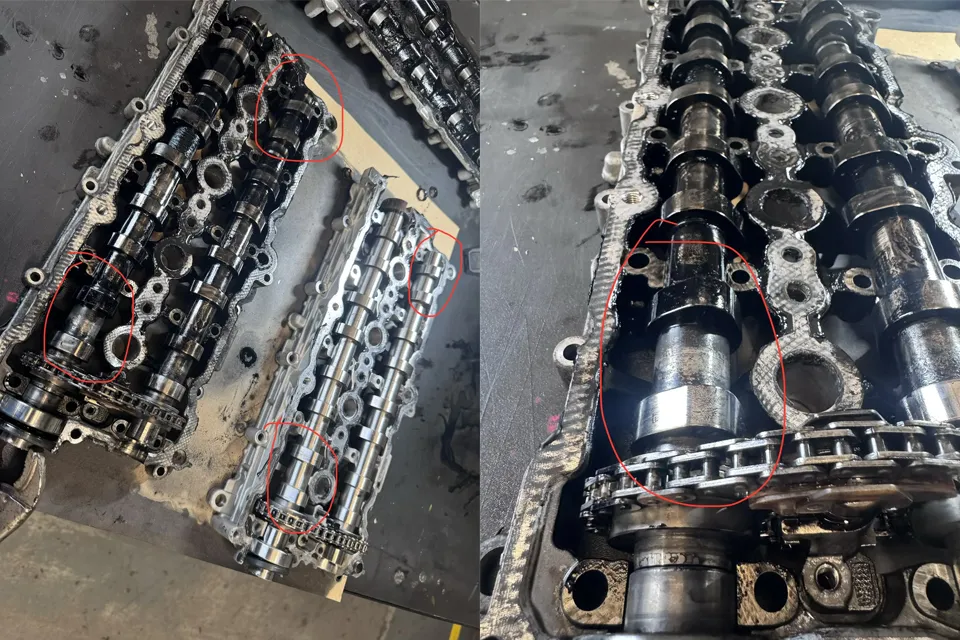
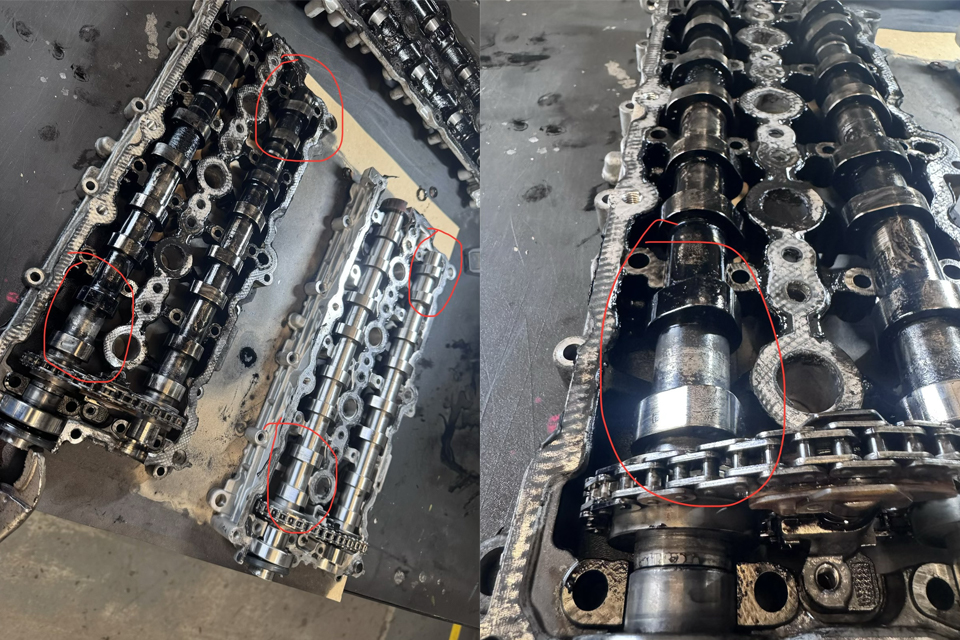
Earlier today, a customer in the UK sent us two installation photos from the workshop and suggested that our DV5 camshaft product might be defective. After reviewing the images, the POWCODE engineering team quickly confirmed that the camshaft itself was not the issue. The real problem was that the wrong alignment reference had been used during installation.
In engine assembly, one of the most dangerous situations is not when a part is obviously damaged. It is when the method looks correct, but the reference point is actually wrong. This DV5 camshaft installation case clearly shows why correct timing reference is essential.
Case summary: The customer used the upper cover as the timing reference. It looked acceptable when viewed separately. However, after the upper cover and lower cylinder head section were assembled together, the intake camshaft and exhaust camshaft positions became reversed, causing the whole timing system to be incorrect.
DV5 Cylinder Head Structure: Upper Cover and Lower Cylinder Head Section
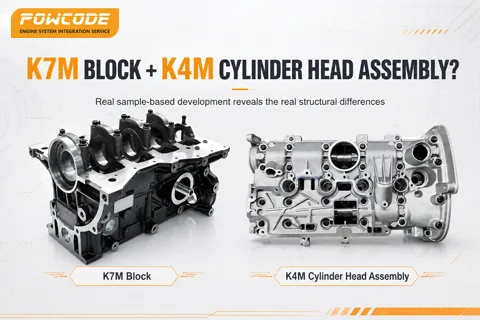
The DV5 cylinder head is divided into an upper cover and a lower cylinder head section. Because of this split structure, the installation reference is very important. If the wrong reference is selected, the camshaft position may appear correct at one stage, but the final assembled timing relationship may still be wrong.
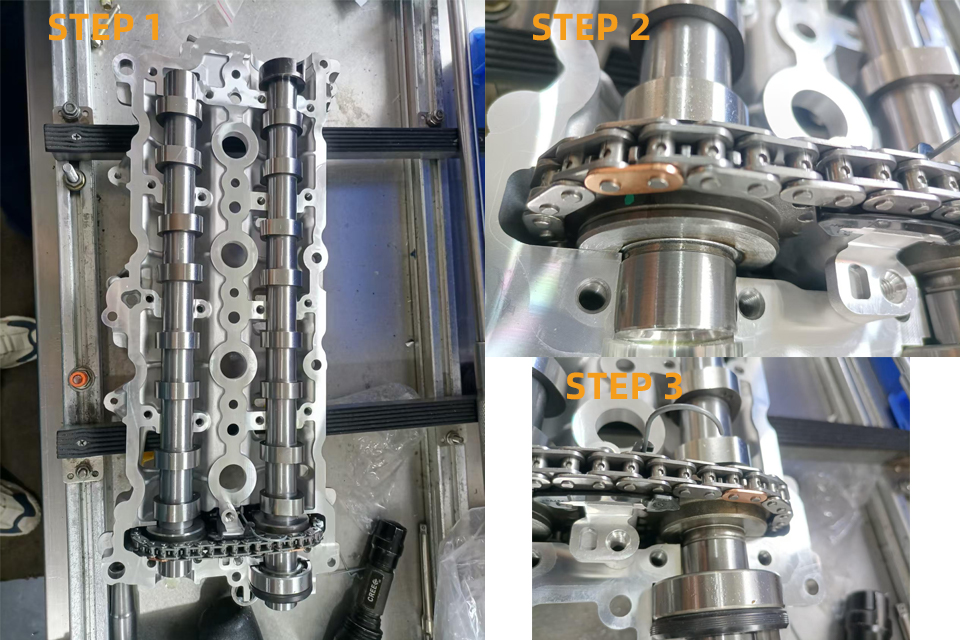
In this case, the customer aligned the camshafts according to the upper cover. When viewed alone, this position may seem correct. But once the upper cover and the lower cylinder head section are combined, the final position of the intake and exhaust camshafts no longer matches the correct timing relationship.
Timing Starts with the Right Reference
Key idea: In any camshaft timing process, the baseline reference must be correct. If the starting reference is wrong, every following alignment judgment can also become wrong.
This principle fits the DV5 case very well. The customer initially assumed that the camshaft itself was faulty, but the real issue was the assembly reference. In other words, a part can be manufactured correctly and still end up in the wrong position if the installation reference is wrong.
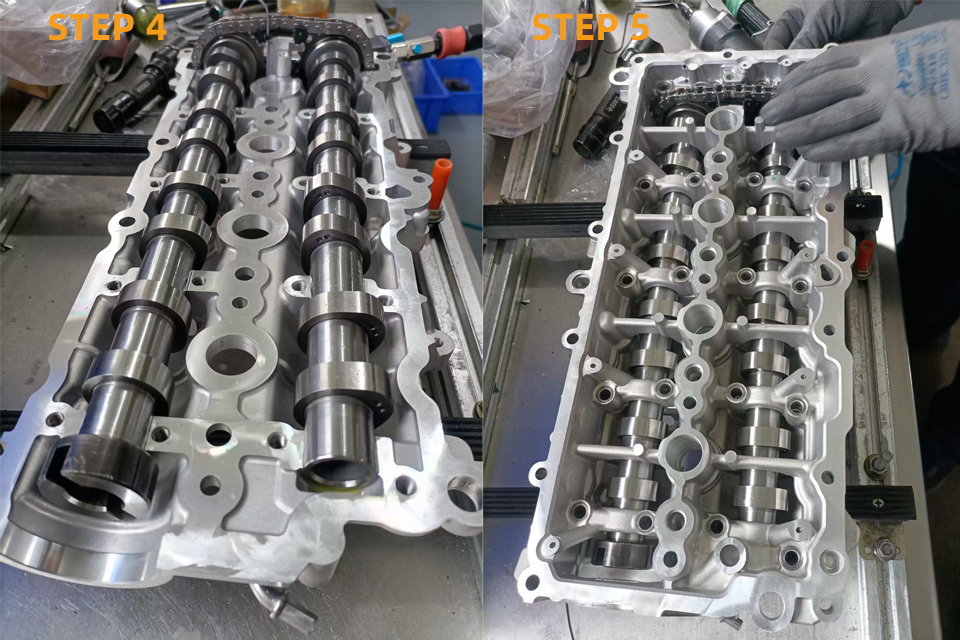
Once the camshaft timing relationship is misplaced, engine performance, valve operation, and running stability can be directly affected. That is why DV5 camshaft installation should not be judged only by whether the parts “look aligned” before final assembly.
Why the Reference Point Matters
Engine manufacturing and assembly depend on a defined reference system. A reference surface is not just a convenient point to line up against; it is the basis for the entire geometry of the assembly.
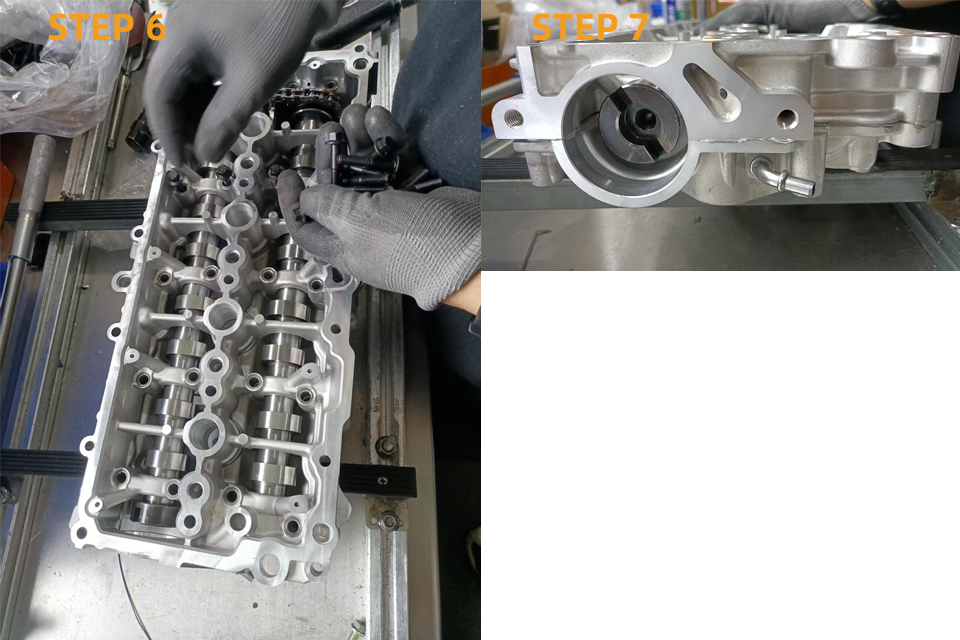
In this DV5 case, using the upper cover as the alignment reference created a false impression. The camshaft position looked acceptable locally, but the real final position after assembly was incorrect. Once the upper cover and lower cylinder head section were together, the intake and exhaust camshaft relationship became reversed.
This is why POWCODE engineering team identified the problem as an installation reference error, not as a camshaft product defect.
Why Timing Errors Are a Serious Problem
Timing errors are not cosmetic problems. The camshaft controls valve opening and closing, and the timing chain keeps the relationship between the intake camshaft and exhaust camshaft synchronized.
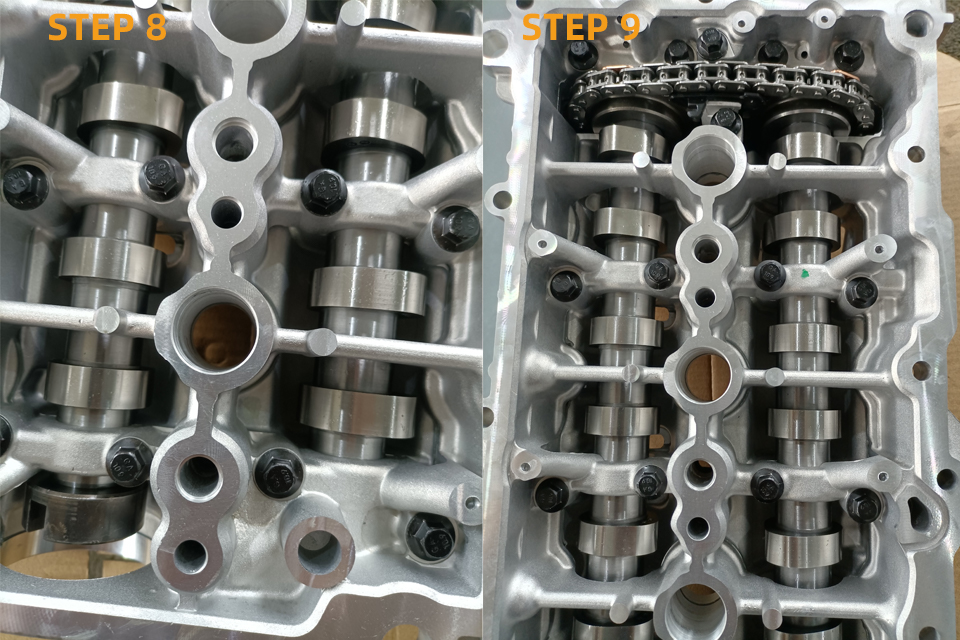
If the intake and exhaust camshaft positions are reversed, the engine is no longer working under the correct valve timing condition. This can lead to abnormal fitting, incorrect timing, poor engine operation, or possible damage during later use.
For this reason, the two camshafts that are already pre-assembled with the timing chain should be treated as one complete camshaft timing assembly, not as two separate shafts to be positioned independently.
Why the Customer Misread the Problem
When the customer aligned the camshafts using the upper cover, the position appeared to be aligned. That is where the mistake becomes easy to make. If the reference surface is wrong, every mark, position, and phase judgment after that point is built on the wrong assumption.
As a result, the diagnosis may point to the camshaft product, even though the real issue is the assembly method. This is why our engineering team did not immediately treat the case as a product defect. We first checked the cylinder head structure, the camshaft relationship, and the assembly logic.
In the end, the root cause was clear: the wrong timing reference had been used during installation.
The Correct Installation Method
For this DV5 cylinder head installation case, the correct alignment reference should be the lower cylinder head section.
The two camshafts are already pre-assembled with the timing chain. Therefore, they should be installed and checked as one complete camshaft timing assembly according to the lower cylinder head section position.
- Do not judge the timing only by the upper cover position.
- Do not treat the intake and exhaust camshafts as two independent shafts if the timing chain has already been installed.
- Check the camshaft assembly as one complete unit.
- Use the lower cylinder head section as the reference for final alignment.
- Before final assembly, confirm that the intake and exhaust camshaft positions are not reversed.
This is also why we made this product demonstration video. We want to show the exact installation logic clearly, because in engine assembly, success depends less on whether the parts “look aligned” and more on whether the correct reference point was used in the first place.
Watch the DV5 Camshaft Installation Demonstration
POWCODE made this DV5 camshaft installation video based on a real customer feedback case. The video explains why the correct timing reference is important during DV5 camshaft assembly.
What POWCODE Stands For
POWCODE does more than supply engine parts. We also help customers identify the real root cause when field issues come up.
In this case, the important fix was not replacing hardware. It was understanding the assembly logic correctly and avoiding a timing mistake that could have been blamed on the wrong component.
For structural engine components like the DV5 cylinder head, camshaft housing kit, timing chain assembly, and related repair parts, installation method, reference datum, and timing logic are just as important as the part itself.
Related DV5 Engine Parts from POWCODE
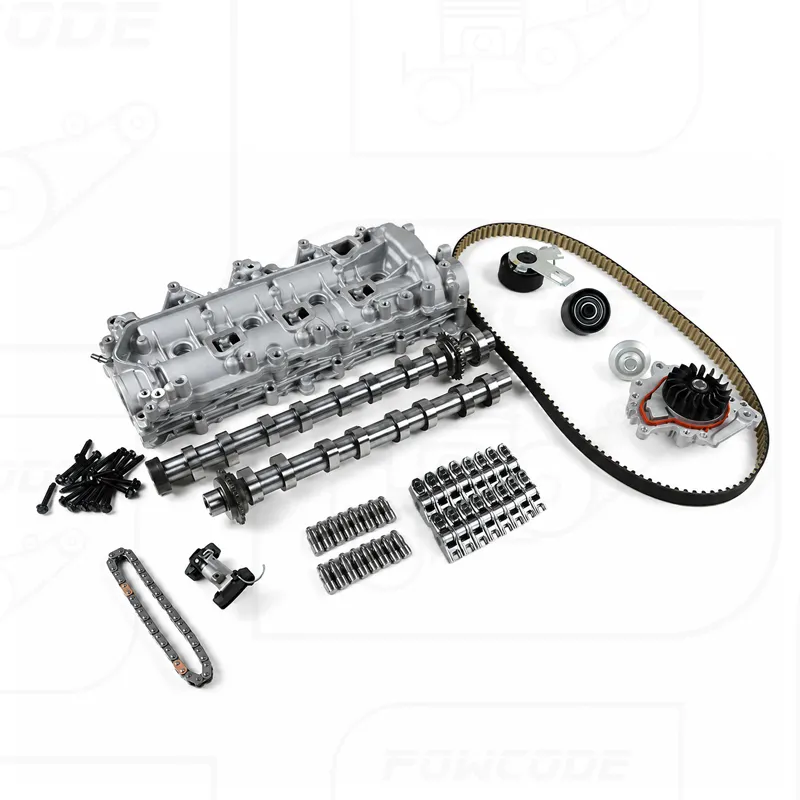
If you are working with DV5 1.5 diesel engine repair, you can view the related cylinder head assembly and camshaft housing kit below.
DV5 Diesel Engine Complete Cylinder Head Assembly
View POWCODE DV5 complete cylinder head assembly for Citroen Berlingo and Peugeot 1.5 diesel applications.
View Cylinder Head AssemblyDV5 Engine Camshaft Housing Kit
View POWCODE DV5 camshaft housing kit with related camshaft components for Citroen and Peugeot 1.5 TDCi / BlueHDi engine repair.
View Camshaft Housing KitFAQ
Why did POWCODE use the lower cylinder head section as the timing reference in this DV5 case?
In this case, the issue came from using the upper cover as the alignment reference. POWCODE engineering team confirmed that the pre-assembled camshafts and timing chain should be checked according to the lower cylinder head section to match the final assembled position.
Can the DV5 camshaft position look correct before final assembly?
Yes. If the upper cover is used as the reference, the camshaft position may look correct in isolation. However, once the upper cover and lower cylinder head section are assembled together, the intake and exhaust camshaft positions may become reversed.
Was this DV5 issue caused by a defective camshaft?
No. Based on the installation photos reviewed by POWCODE engineering team, the issue was caused by an incorrect timing reference during installation, not by a defect in the camshaft itself.